Temecula DSP SST-206 Plugin
A faithful recreation of the legendary digital reverb.
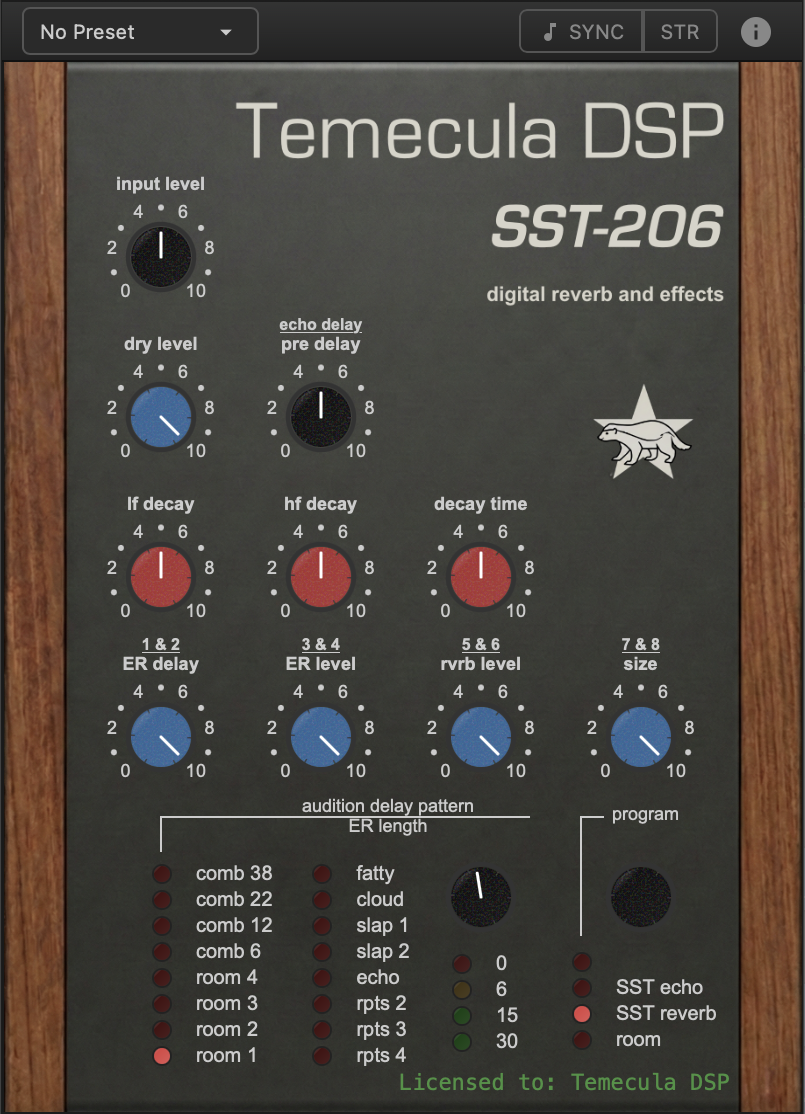
The Sound of Deep Space
The SST-282 Space Station (1978) defined the reverb sound of artists like Depeche Mode, Tycho, and Hannes Bieger. Its time-modulated algorithm created a lush, dimensional space that remains instantly recognizable to this day.
The SST-206 enhances the original's 7kHz bandwidth to 22kHz with longer delay times - and now you can have it in your DAW without paying $4,000+ for a used hardware unit.
The SST-206 is a direct mathematical reconstruction of the original DSP architecture.
VST3
|
AU
|
AAX
Demo will output 3 seconds of silence every 30 seconds and cannot save presets. Purchase a license to upgrade the demo to a full copy.
Read about what makes the Space Station different.
Transmissions from the Space Station
These samples demonstrate the Temecula DSP SST-206 plugin. Every track plays the Dry (unprocessed) loop first, followed by the Wet (processed) version. In the filenames, "282" refers to Regular Mode and "206" refers to Plus Mode. Settings are listed in the format: Program-Delay-Echo/Reverb-Decay Time.
What Artists Are Saying

"I've got to say this plugin left me absolutely stunned; after owning the real SST-206 and using it for some time across multiple records, this VST looks and sounds perfect. This isn't just an homage to the original; it IS the original running in my DAW. So much so that I no longer have any reason to own the original hardware, so I don't!"
Shane Etter, MANMADEMADMAN

"The Temecula DSP Space Station is utterly incredible! I've waited years for a company to faithfully recreate what was one of the most characterful reverb/delays ever made. The wait is finally over!"
Features
5 programs: SST Echo, SST Reverb, Echo Plus, Reverb Plus, Room
Original mode: 7kHz bandwidth, 11-bit floating point converters
Plus mode: 22kHz bandwidth, 24-bit linear PCM
Echo delay up to 255ms (Original) or 670ms (Plus)
16 audition delay patterns, 8 taps each, 1–255ms range
Indefinitely long decay in Echo Plus mode
Dedicated 16-line FDN Room reverb with true stereo processing
Room decay times from 0.2s to over 100s
Adjustable room size from x1/32 to x1
Independent early reflection processor (5 reflections per channel)
LF and HF shelving EQ (+0/−10 dB)
Available as VST3, AU, and AAX
Five Programs
Four faithful recreations of the Space Station algorithms plus a dedicated modern Room reverb — each optimized for different material and production needs.
SST Echo — Original Mode
Single-tap feedback echo with up to 255ms delay, 7kHz bandwidth, and 11-bit floating-point converters. The warm, slightly lo-fi character of the 1978 hardware.
SST Reverb — Original Mode
High-density reverb from a large number of randomized, modulated feedback taps. 7kHz bandwidth with the distinctive 282 character. Use the four audition tap mixers to balance the spatial image.
Echo Plus — Extended Mode
Full 22kHz bandwidth and 24-bit linear PCM. Echo delay extends to 670ms and decay can run indefinitely long. Smoother modulation (20.8μs stepping) for cleaner long tails.
Reverb Plus — Extended Mode
The same feedback architecture as SST Reverb but with extended 22kHz bandwidth and 24-bit dynamic range. The 282 character without the bandwidth limits.
Room — FDN Reverb
A completely separate algorithm: a 16-line Feedback Delay Network with a dedicated early reflection processor. True stereo, no time modulation, flat response to 22kHz, decay from a fraction of a second to over 100 seconds.
16 Audition Delay Patterns
In the SST programs, the audition delay pattern selector chooses among 16 pre-programmed tap arrangements grouped into four families. Each pattern offers a different temporal perspective on the same reverberant field.
Rooms 1–4
Four patterns using semi-randomly chosen delays spaced like the early reflections of rooms. Max delay ranges from ~70ms (Room 1) to 255ms (Room 4).
Combs 6, 10, 22, 38
Non-recursive comb filter effects with taps spaced at even 6, 10, 22, and 38ms intervals. Deeper and more complex than a traditional comb — sci-fi voices, tuned percussion, sharp edges on guitars and harps.
Fatty & Cloud
Clusters of closely-spaced delays. Fatty sits below the Haas fusion limit (~40ms) for louder, richer perception without audible separation. Cloud is slightly later — just audible with transients but smooth on fluid sources.
Slap 1, Slap 2, Echo
Longer-delay clusters audible as real slap echo. Slap 1 and Slap 2 use eight taps for extra fatness, and Echo provides a single punchy repeat at ~250ms.
Space Repeats 2, 3, 4
Evenly-spaced repetitions between 0 and 255ms with stereo motion. Space Repeat 2 is L–R, Space Repeat 3 is L–Center–R, and Space Repeat 4 is L–R–L–R.
The History of the Space Station
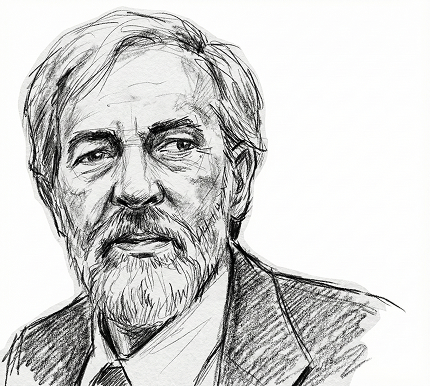
Christopher Moore, founder of Ursa Major and Seven Woods Audio.
In 1977, Christopher Moore left his position as project engineer at Lexicon to found Ursa Major. Working from his cellar, Moore set out to create a high-quality digital reverb at an accessible price point. When the SST-282 Space Station debuted at the 1978 Los Angeles AES Convention, it offered studio-quality digital processing for around $2,000—a fraction of the $20,000 price tag on competitors like the EMT 250.
The Space Station wasn't a traditional reverb at all. It was a multi-tap delay unit using a "randomizing" algorithm with eight dedicated listening taps and additional taps for synthesizing reverberation. This unconventional approach produced sounds that didn't mimic real acoustic spaces; instead, they created entirely new ones. The resulting "space" became the sonic signature of countless recordings from the late 1970s through the 1980s, appearing on work by artists ranging from ABBA to Frank Zappa, and later embraced by producers like James Murphy (LCD Soundsystem), Adrian Utley (Portishead), and electronic artists including Tycho and Ulrich Schnauss.
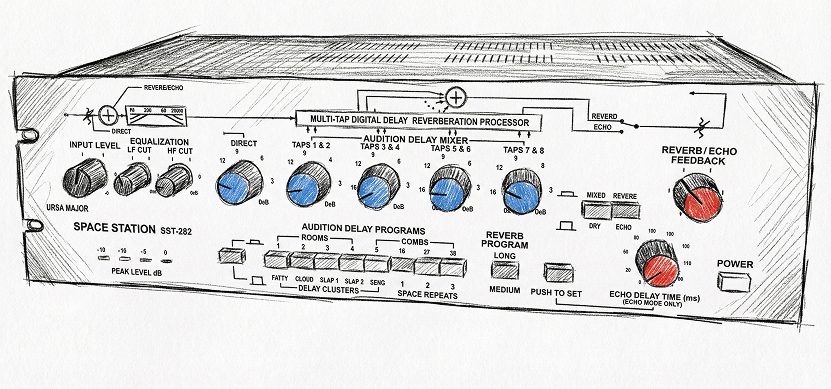
Front panel view of the original Ursa Major Space Station SST-282. With only 1900 units ever manufactured, this device sells for upwards of $4000 on the secondary market.
With only 1,900 units ever manufactured, the SST-282 became increasingly rare and expensive. In 2003, Moore returned to the audio industry with Seven Woods Audio and released the SST-206—a complete recreation of the original algorithms running on modern hardware. The entire processor was miniaturized into a handheld form factor while expanding the frequency response from 7kHz to a full 22kHz and operating at 24-bit/48kHz. This plugin carries that legacy forward, bringing the authentic Space Station sound to your DAW without the vintage price tag.
Read more about Christopher Moore in this interview from Tape Op Magazine.
Press
The Innovation Behind the Legend
STANDARD TAPE ECHO
FIXED TAPS
TEMECULA DSP SST-206
MODULATED TAPS
Traditional Tape Delay
A conventional tape echo uses fixed playback heads positioned at set intervals along the tape path. As audio passes through, each head produces a distinct repeat at a predictable delay time. While this creates the classic slapback and rhythmic echo effects, the fixed nature of these taps produces repeating patterns that can become audible as flutter or ringing when fed back to create longer decay times.
The SST-206 Time Modulated Delay System
The Space Station employs a revolutionary approach: fifteen modulated taps that continuously shift position in complementary pairs. When one tap moves forward, its partner moves back, canceling out pitch artifacts while breaking up repeating patterns. Notice the uneven spacing — the taps cluster more densely at longer delay times, mimicking how echo density naturally increases in real acoustic spaces. This elegant design can produce everything from standard rooms and plates to long, ghostly tails — all without the instability of traditional feedback systems.
© 2026 Temecula DSP.
SST-282, SST-206 and Stargate 626 are model numbers originally used by Ursa Major and Seven Woods Audio. Temecula DSP is not affiliated with the estate of Christopher Moore, Ursa Major, or Seven Woods Audio.
DP/4 is a trademark of Creative Technology Ltd. Temecula DSP is not affiliated with, endorsed by, or sponsored by Creative Technology Ltd.
"Alesis" and "MidiVerb" are trademarks of inMusic Brands, Inc. Temecula DSP is not affiliated with, endorsed by, or sponsored by inMusic Brands, Inc.